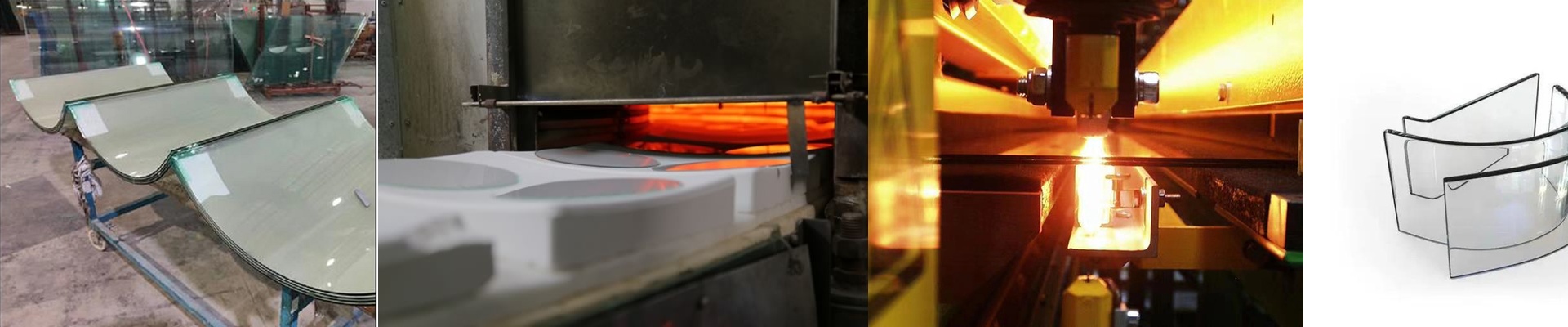

On the line, oven doors cycle and the press sits ready, waiting for the glass to hit temperature—then hold it even, all the way across. Get the profile wrong and you’ll pay for it: optical distortion, thermal stress fractures, or a lamination bond that doesn’t clear inspection. The point isn’t chasing peak temperature. It’s controlling the thermal field with repeatable timing, clean stability, and consistent speed. What actually matters under the hood We build heating modules around NIR (short-wave infrared) emitters in quartz envelopes, tuned for fast response and high power density. The spectral output is matched to glass emissivity, so heat drives into the surface quickly, and closed-loop control keeps the profile tight across zones. The payoff is predictable soak times, less idle heat, and output you can count on—whether you’re running 6 mm tempering glass or multi-layer laminated windshields. Why this approach earns its keep on the floor On bending, the heater brings the sheet right to the softening point without scorching the edges, so shape repeatability gets better and scrap drops. In tempering, preheating shortens the furnace cycle and reduces pressure shock risk. For lamination, uniform heat across the stack cures the resin evenly, so bubbles and haze stop showing up on the inspection sheet. In coating drying, controlled heat pulls solvents out fast while keeping film integrity intact. Shorter dwell, stable profiles—throughput goes up and rework goes down. Here are the practical details that keep it running These modules are compact and high-output, so wiring, cooling, and shielding have to fit the machine footprint and the electrical budget. Clearances matter. Keep reflectors and insulation clean, because alignment directly shapes the thermal pattern. Plan for voltage and phase compatibility, and when you swap emitters or change glass thickness, run a quick calibration. Treat it like a process variable, not just a bolt-in replacement.