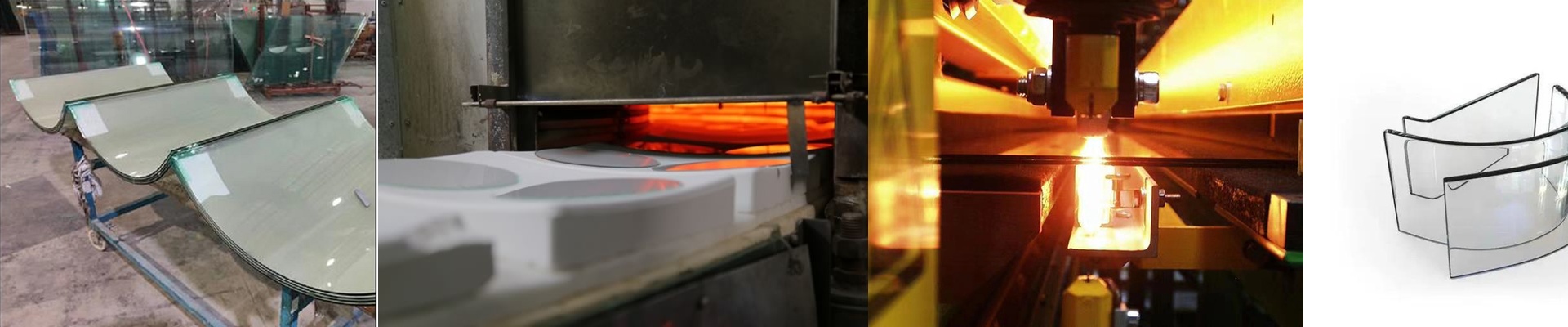

On the line, heat has to hit exactly where you need it, exactly when you need it. One cold spot in bending and the glass fights the mold. One overshoot in lamination and the film cures uneven. In coating, too much convection and you get mottle. In insulating glass, a slow seal drags out cycle time and eats yield. We built the precision glass bending lamp for plants that run on repeatability, not wishful thinking. It’s a purpose-built heating module for the moments that decide yield: hot bending, tempering preheat, EVA/SGP/PVB lamination curing, and coating drying.
What matters under the hood
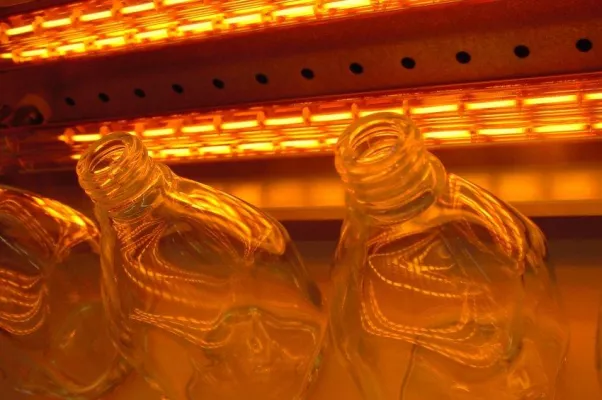
At the core is a short-wave infrared (SWIR) emitter matched to how glass and functional films absorb energy. SWIR pushes heat deep into the glass with minimal reliance on surface convection, so you get faster, more even heating right where you want it. The engineering choices all point to repeatability:
- **Wavelength control.**The emitter is tuned to a narrow band that glass readily accepts, so you waste less heat and get a cleaner temperature response. This matters when you’re chasing a specific bend radius and can’t afford thermal lag.
- **Uniform power density.**The lamp geometry and reflector layout are set so the power density stays consistent across the heating zone. That’s how you avoid localized hot bands that cause optical distortion or thermal stress.
- **Fast thermal response.**SWIR heats on demand. When the PLC calls for a ramp, the lamp reacts within seconds, shortening cycle time and tightening control over the heating profile.
- **High-temperature quartz envelope.**The quartz body handles repeated heating and cooling cycles while holding output steady. In production, that means fewer lamp swaps and less batch-to-batch variance.
- **Rated for industrial duty.**The module is built for continuous operation—high current, solid terminations, and a mechanical footprint that fits standard mounting and wiring on processing machines.
Where it earns its keep
This lamp makes its money in the four places where heat decides glass quality.
Hot bending and forming
In hot bending, the glass has to reach a uniform forming temperature across the entire bend area. Uneven heat means uneven stretch, and uneven stretch means stress that shows up later as breakage. The lamp’s focused infrared narrows the temperature gap between center and edges, so the glass drapes predictably and holds the intended shape. Fewer rejects, less rework—especially on complex profiles.
Tempering preheat
Tempering starts with preheat, and preheat has to be even before the quench. If one side is cooler, quench stress becomes asymmetric, and temper levels drift. The lamp brings the glass up quickly and uniformly, so the quench delivers consistent compressive stress. That consistency lifts first-pass yield and cuts the risk of spontaneous breakage.
EVA/SGP/PVB lamination curing
Lamination is chemistry and heat. EVA and PVB need a controlled thermal profile to flow, bond, and degas without bubbles. SGP needs a stable cure to hit adhesion and optical clarity. The lamp delivers rapid, even heat that penetrates the stack with minimal surface overheating. That gives you a cleaner bond line, fewer bubbles, and a shorter cure window.
Coating drying and insulating glass sealing
Coating drying is sensitive to air movement and temperature gradients. Too much convection and the coating skins over while solvent stays trapped. The lamp’s direct infrared heat dries from within, reducing mottle and pinholes. For insulating glass, the primary seal needs fast, controlled heat to lay a uniform bead without driving moisture into the cavity. Faster, more controlled heating shortens the seal cycle and improves long-term reliability.
What to keep in mind
This is industrial equipment, and it behaves best when you treat it as part of the process system, not as a standalone heater.
- **Keep the optical path clean.**Infrared delivery depends on an unobstructed line of sight. Keep the lamp and reflector free of dust, debris, and coating overspray. A dirty reflector cuts effective power and can create uneven heating.
- **Match the profile to the work.**The lamp is strong on direct radiation and weak on convection. For thick glass or stacked loads, pair it with controlled convection or add a soak period to equalize temperature through the thickness.
- **Manage the electricals and thermals.**Use the correct current rating for the terminations, and support and cool the lamp body per the mounting instructions. High-temperature operation is normal, but improper wiring or mounting will shorten service life.
- **Check compatibility.**The lamp fits standard mounting and power interfaces common on glass processing machines, but machine designs differ. Confirm the footprint and wiring before integration. If your plant runs on cycle time and first-pass yield, the precision glass bending lamp is a practical upgrade: faster ramps, tighter uniformity, and fewer surprises in tempering, bending, lamination, and coating.