Getting Your IR Heaters to Actually Talk to Your Glass
Ever feel like you’re cranking up your infrared heaters, but the glass just isn’t reacting? It’s frustrating. You’re paying for the power, but the heat is just floating away into the air. Here’s why that happens: glass is picky. Especially when you add dopants or chemicals to change the color or thermal properties, the material stops being a “general” absorber. It only wants to take in heat at very specific wavelengths. If your lamp is shouting in a frequency the glass can’t hear, you’re just wasting electricity.
The trick to spectral matching
We fix this by tuning the lamp to match the chemistry of your specific glass batch. Instead of a one-size-fits-all approach, we tweak the filament and the quartz coatings to shift the emission curve. The goal is to make the lamp’s “peak” line up perfectly with what the glass is actually looking for. When you get this right, the heat doesn’t just sit on the surface and scorch it. It sinks deep into the substrate. That’s a huge win because it stops those annoying surface cracks and thermal shocks that happen when you’re trying to heat things up quickly.
The trade-off (because there’s always one)
Now, there is a catch. When you tune a lamp for precision, you lose some of that raw, broadband power. You won’t see the same massive wattage across the board that you’d get from a cheap, generic halogen lamp. You’re trading brute force for accuracy. Because of that, you might find you need to leave the glass in the heater a bit longer, or maybe add a few more lamps to your array to keep your production speed where it needs to be.
Making it work in your shop
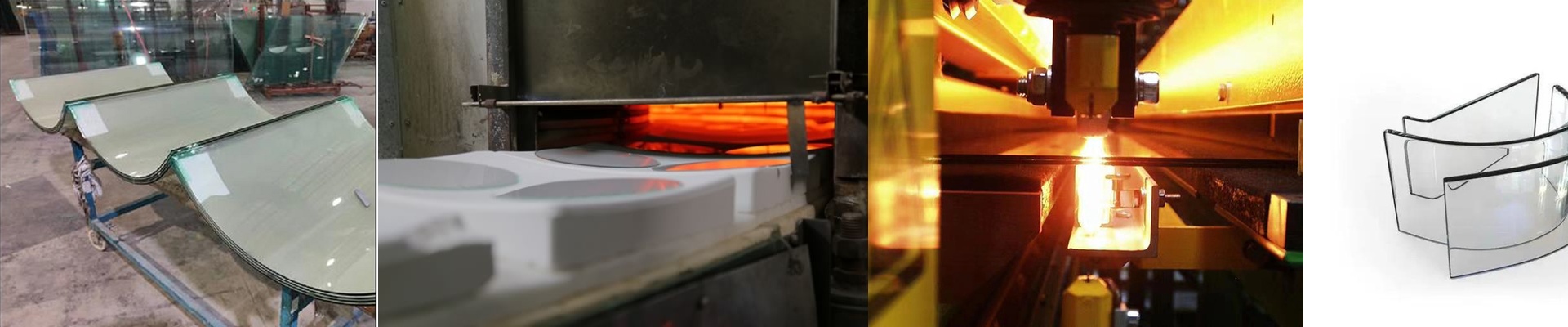
The good news? These lamps are designed to drop right into your existing molding jigs. No need to rebuild your whole setup. But a quick tip: be obsessive about your reflector geometry. If your reflectors are off by even a little bit, they’ll scatter those tuned wavelengths. It basically kills the efficiency we worked so hard to build into the spectrum. And for heaven’s sake, pair them with a solid PID controller. You want a smooth ride to the transition temperature, not a wild overshoot that ruins your parts.